 Powered by Stripe
 Powered by ADPList
Menfess.co
Designing a pen name feature so anonymous writers can build a lasting identity
2025 • 1 month • React Native • Co-Founder & Design Lead
Live website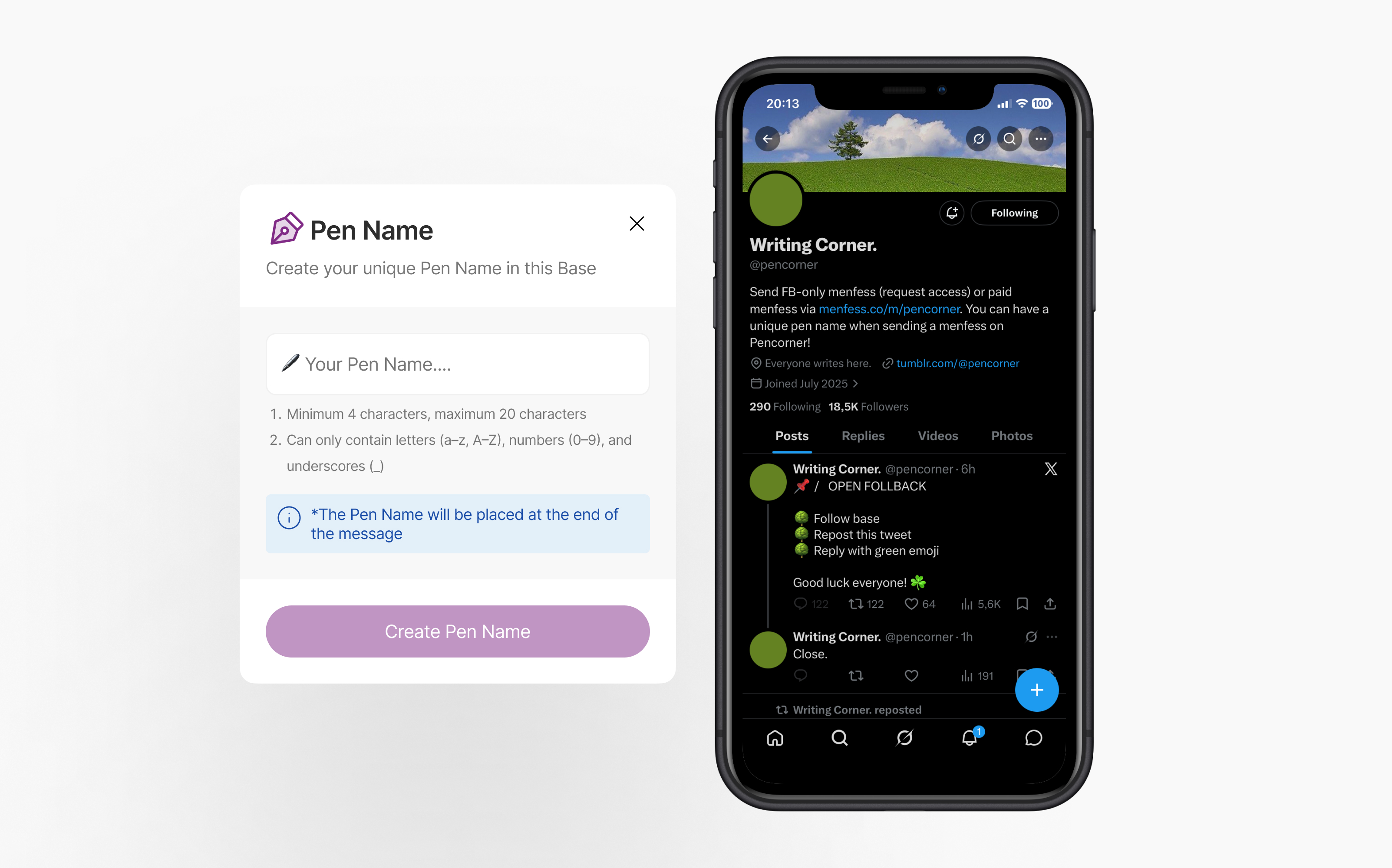
What is the pen name feature?
A pen name lets a sender publish their threads under a consistent, chosen alias instead of staying fully anonymous.
Menfess.co has always been built on anonymity. The pen name feature introduces a middle ground: senders can attach a self-chosen alias to their threads, so their writing becomes recognizable over time while their real identity stays protected. A pen name sits on a spectrum, with full anonymity on one end and real identity on the other. That middle ground is where a writers community lives.
Design exploration
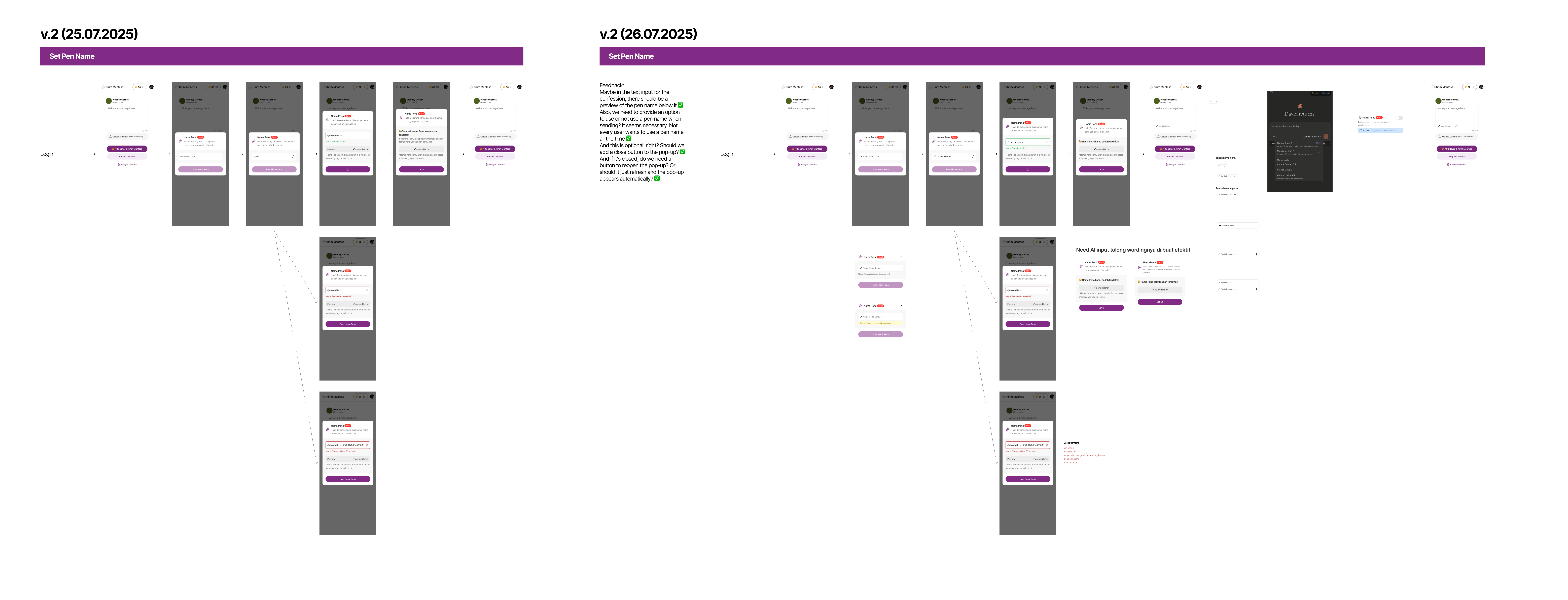
I explored multiple directions before settling on the final design.
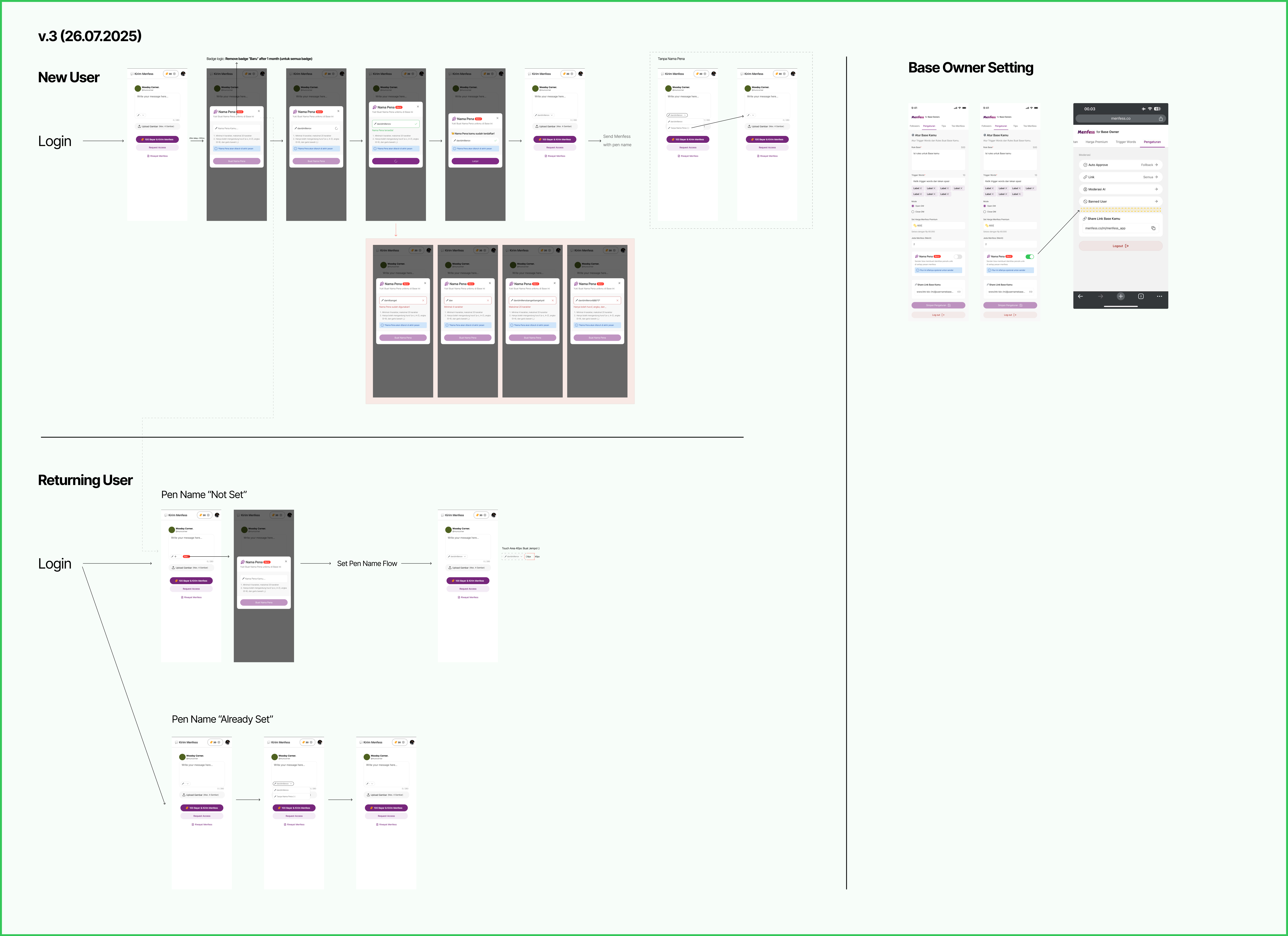
The first versions were rough. I iterated on the create flow, the send-time picker, and the validation states across several rounds of feedback with the team. Each iteration sharpened the interaction: should the pen name preview appear inline? Should the picker be a dropdown or a bottom sheet? What happens when a name is taken?The exploration below shows v1 through v3 side by side, with the team's feedback annotated alongside.
Mapping the flows
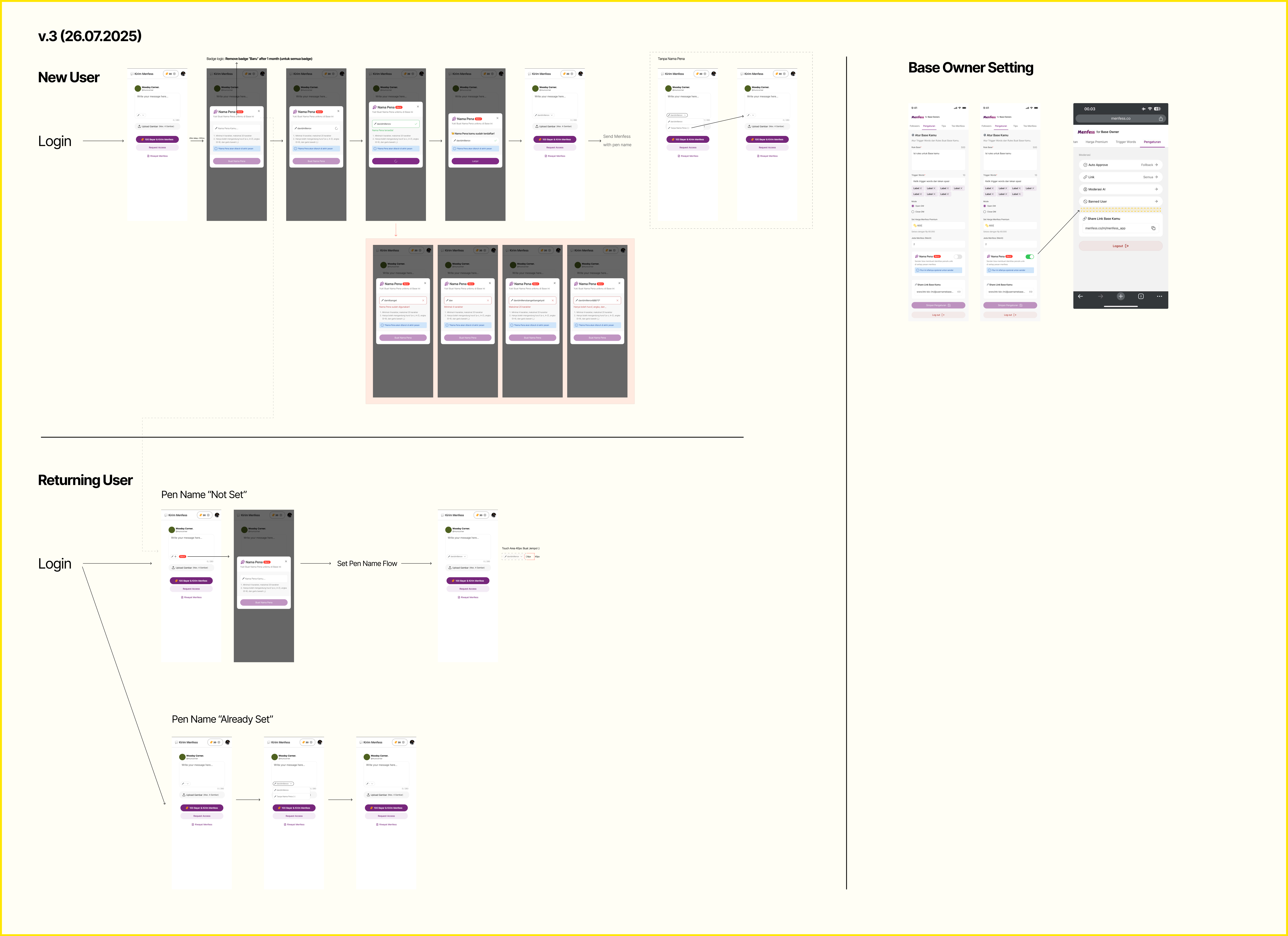
I mapped every moment a pen name touches the user journey.
Creating a pen name is only half the story. The feature only works if the right alias gets attached to the right thread, every single time. I mapped the full journey to find every decision point: creating a pen name from settings, creating one inline while composing a menfess, switching between aliases before sending, and editing or archiving them later. This mapping is what told us the inline 'pick a pen name' step at send time was non-negotiable. Without it, a writer with multiple aliases would constantly publish under the wrong one.
Where it lives
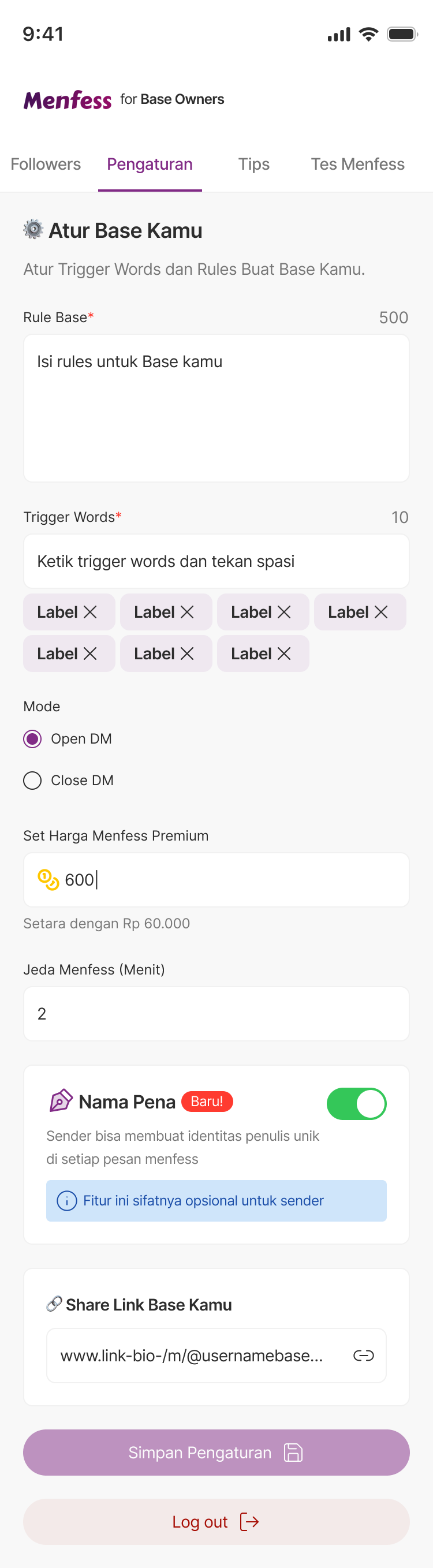
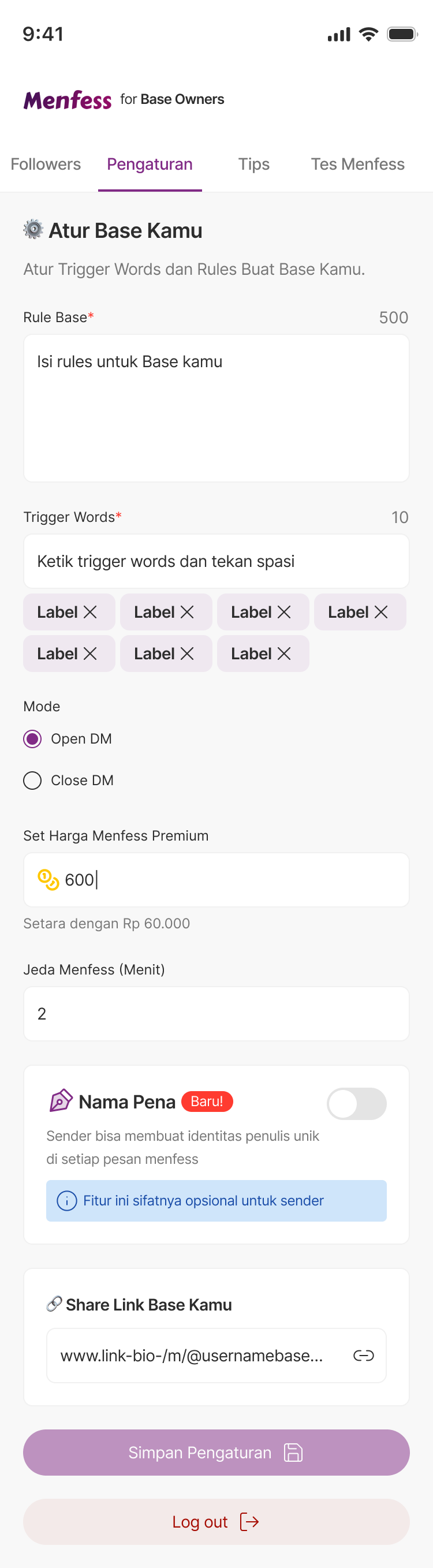
For a Base Owner, it's a single toggle.
A pen name is opt-in for each base. Base Owners enable it from Settings, where it appears as a new 'Nama Pena' row with a simple switch and a one-line explainer. From a sender's perspective, nothing changes until their base turns it on, which keeps the feature invisible to communities that just want anonymous confessions.
The create flow
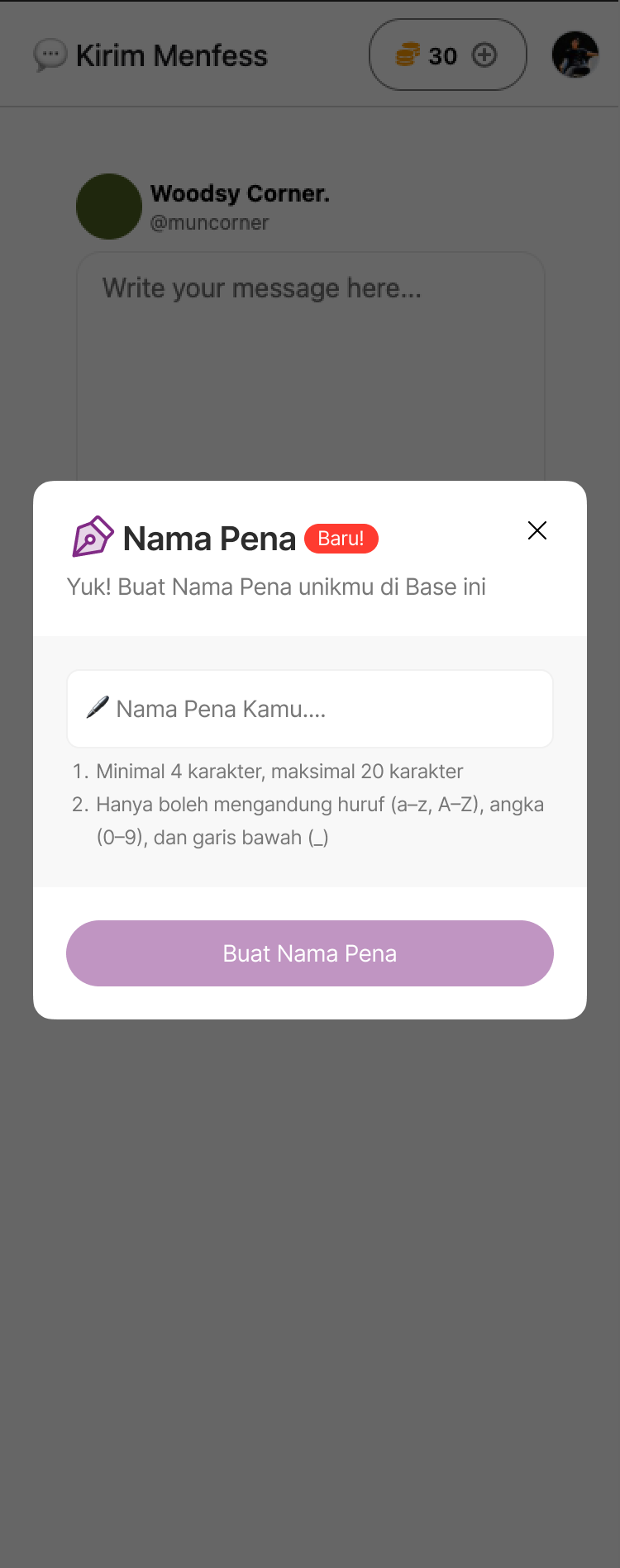
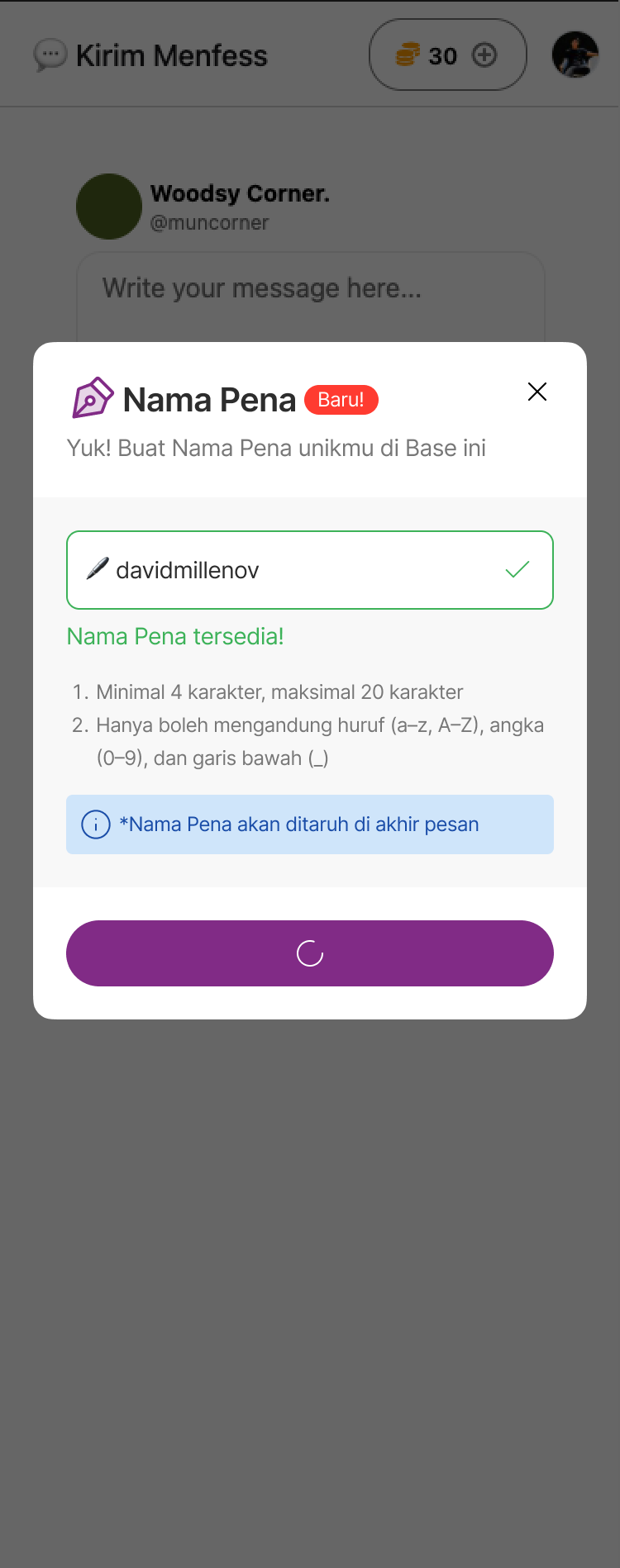
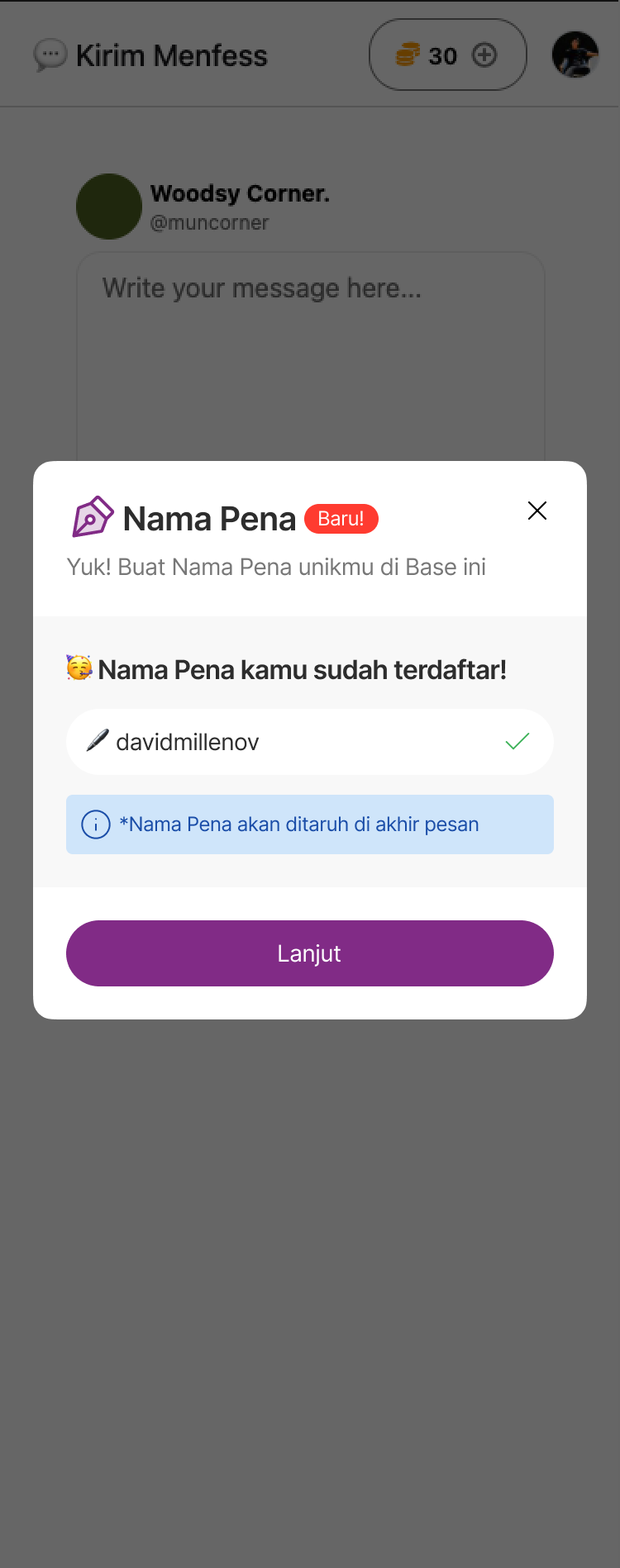
Creating a pen name has to feel effortless, but the name itself has to be trustworthy.
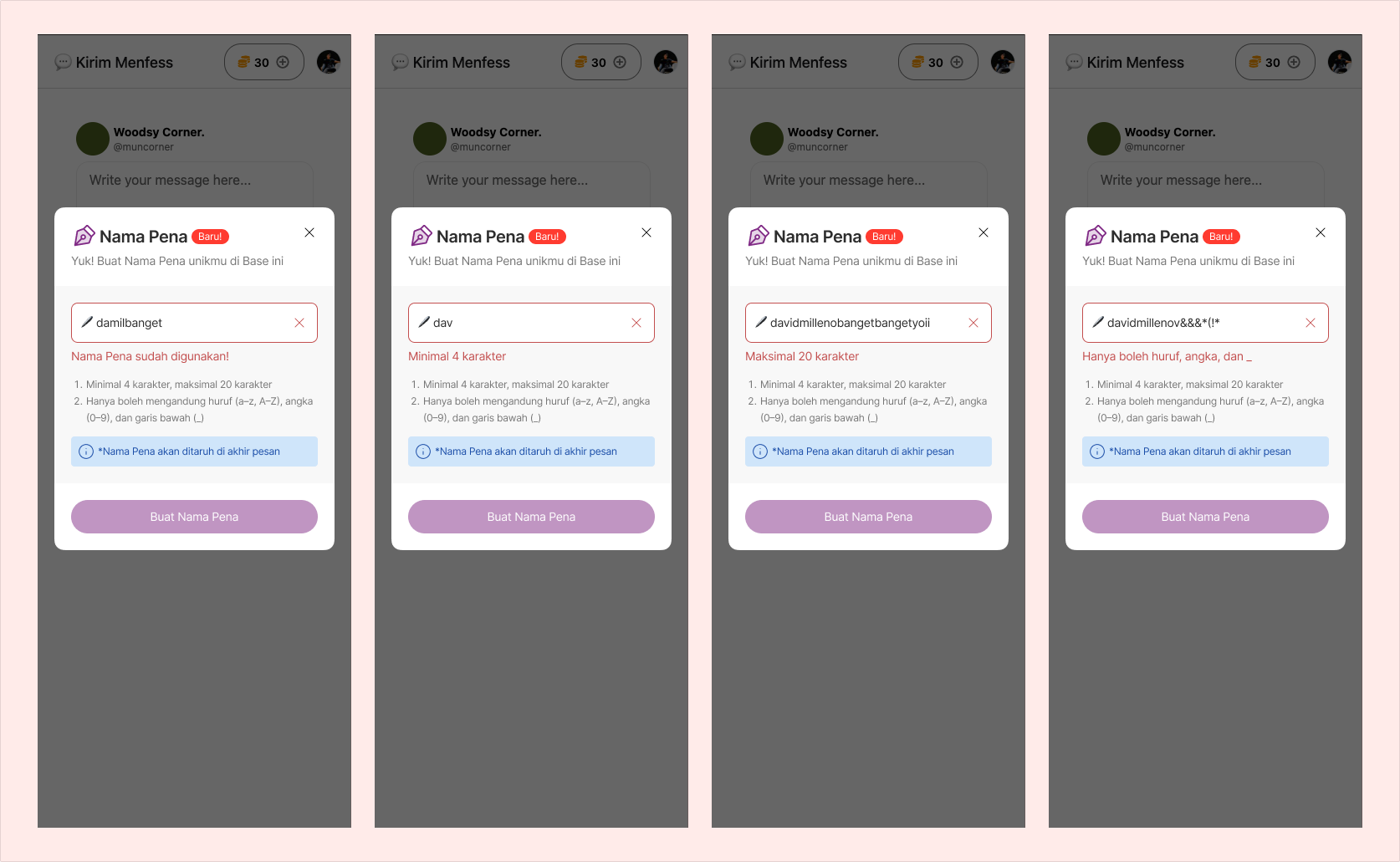
I designed the create flow around two goals: keep it to a single screen, and validate the name in real time. A sender enters their alias and immediately sees whether it's available, fits within the character limit, and passes a profanity filter, before they ever hit submit. The pen name can be created from settings or inline at send time, so a writer is never more than one tap away from a new identity.
Picking at send time
Choosing an alias has to happen right where the writing happens.
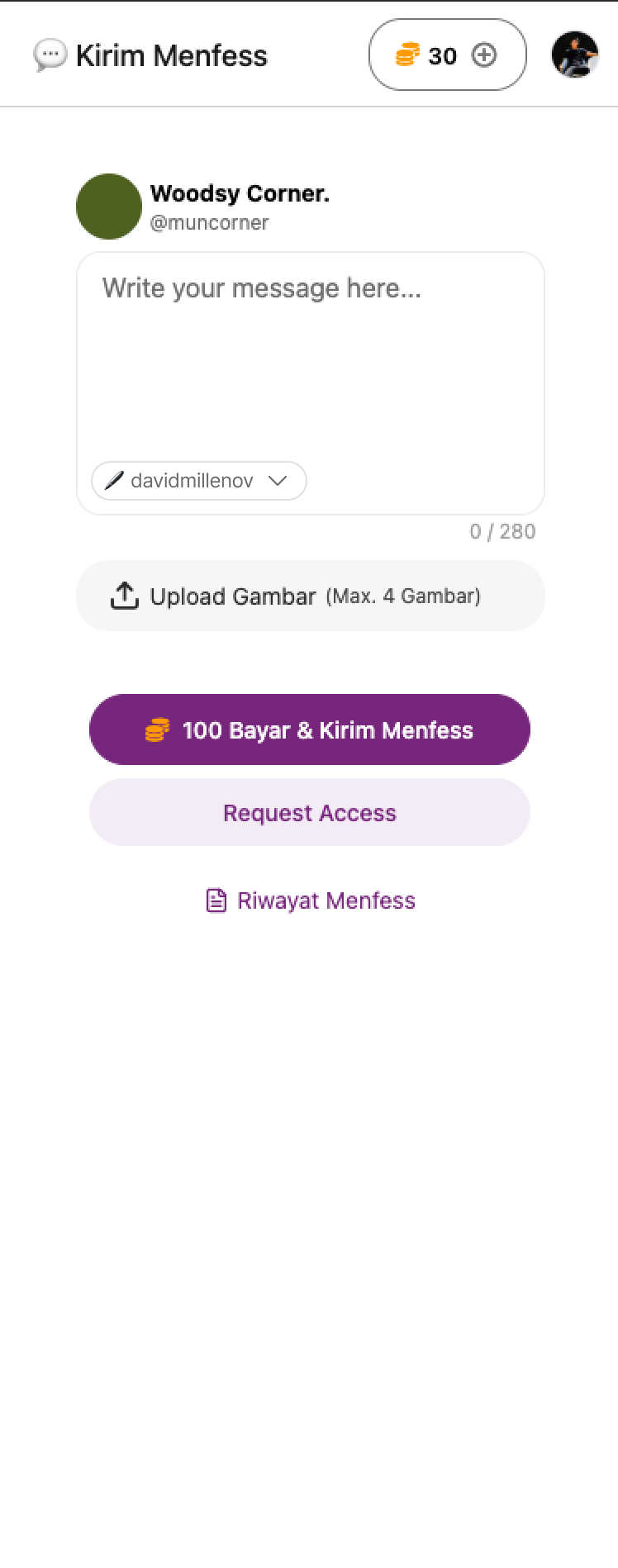
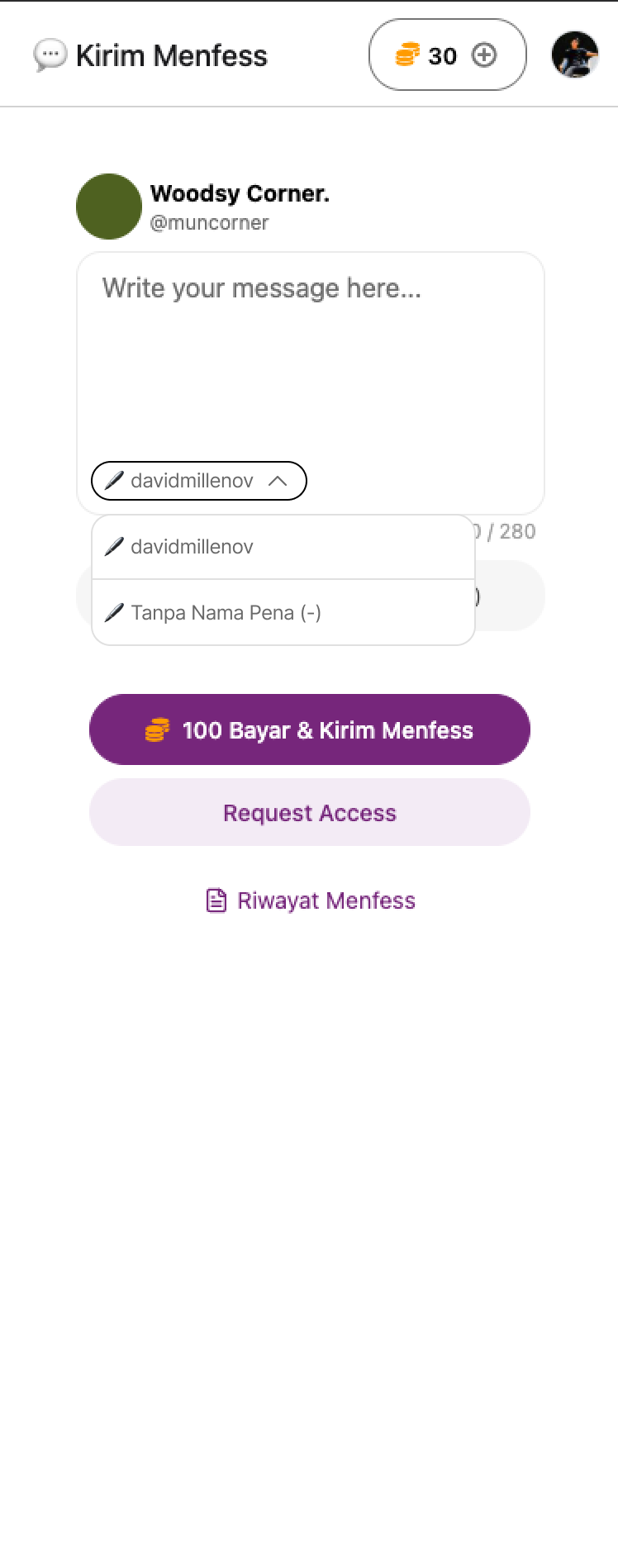
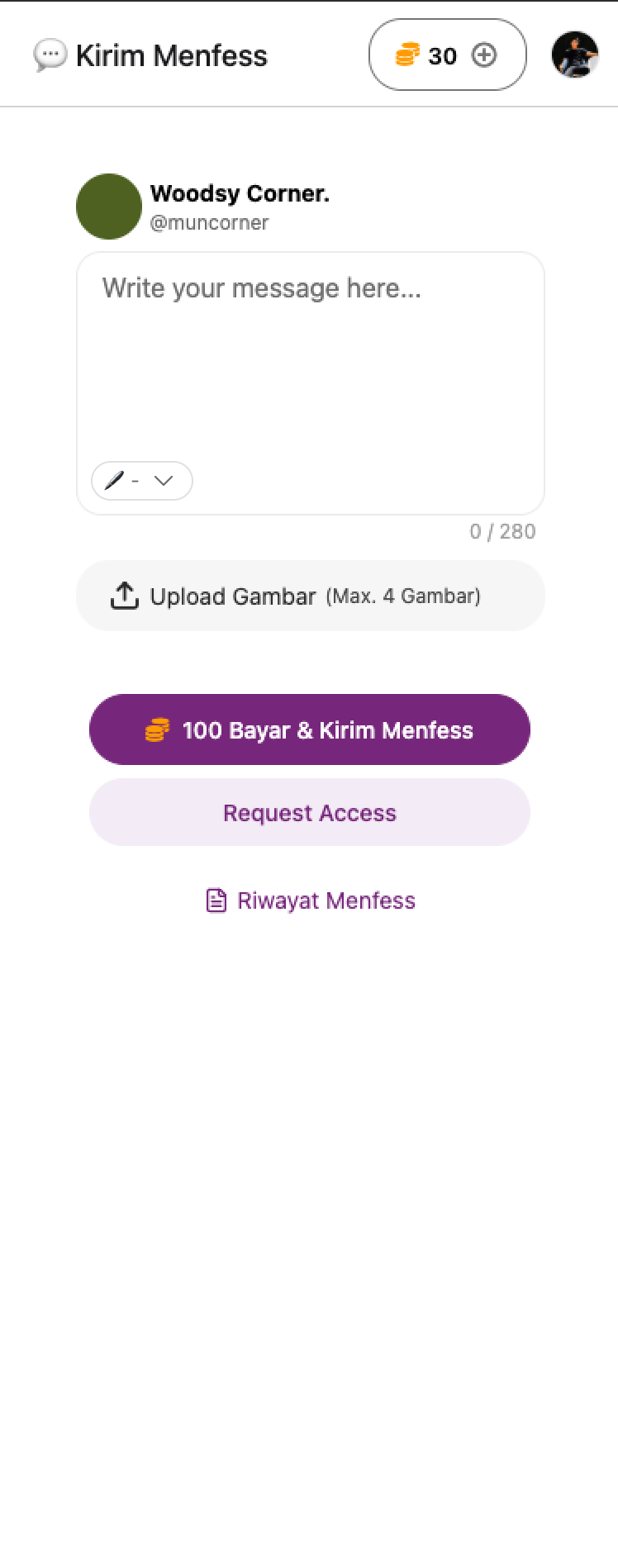
When composing a menfess, the sender sees a pen name picker at the top of the composer. They can keep their default, switch to another alias, or send with no pen name at all, because the feature is optional, and 'Tanpa Nama Pena' (without a pen name) is always an explicit, reachable choice. This is what keeps the anonymity-first audience comfortable.
Validation and edge cases
Trust is built in the smallest details.
A pen name is only meaningful if it's unique and clean. I designed the validation states to guide rather than block: taken names, names that are too short, and names that break the character rules each get a clear, friendly message the moment they're typed. The rules are simple: 4 to 20 characters, letters, numbers and underscores only. But communicating them well is what makes the feature feel dependable.
Design specs
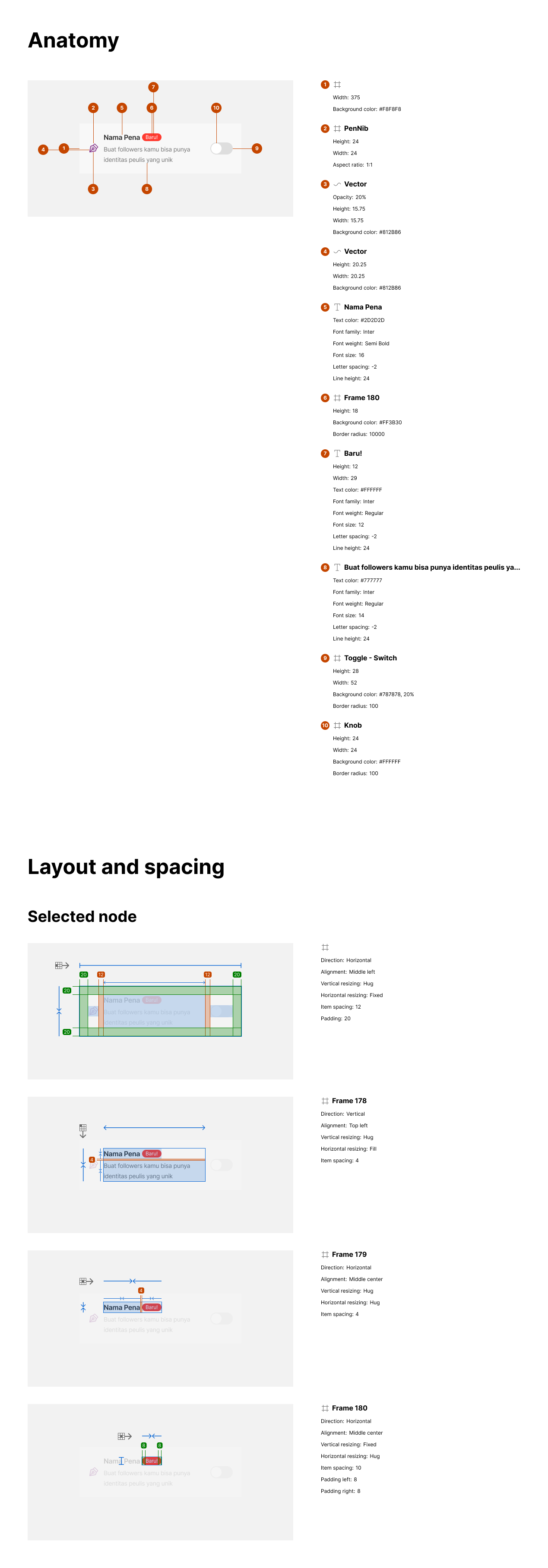
The pen name row had to feel native to the existing design system.
I documented the anatomy, typography, and spacing of every element in the pen name row, from the pen-nib icon down to the toggle switch. Keeping the specs tight meant the feature shipped looking like it had always been part of Menfess.co, not like a new layer bolted on.
Final designs
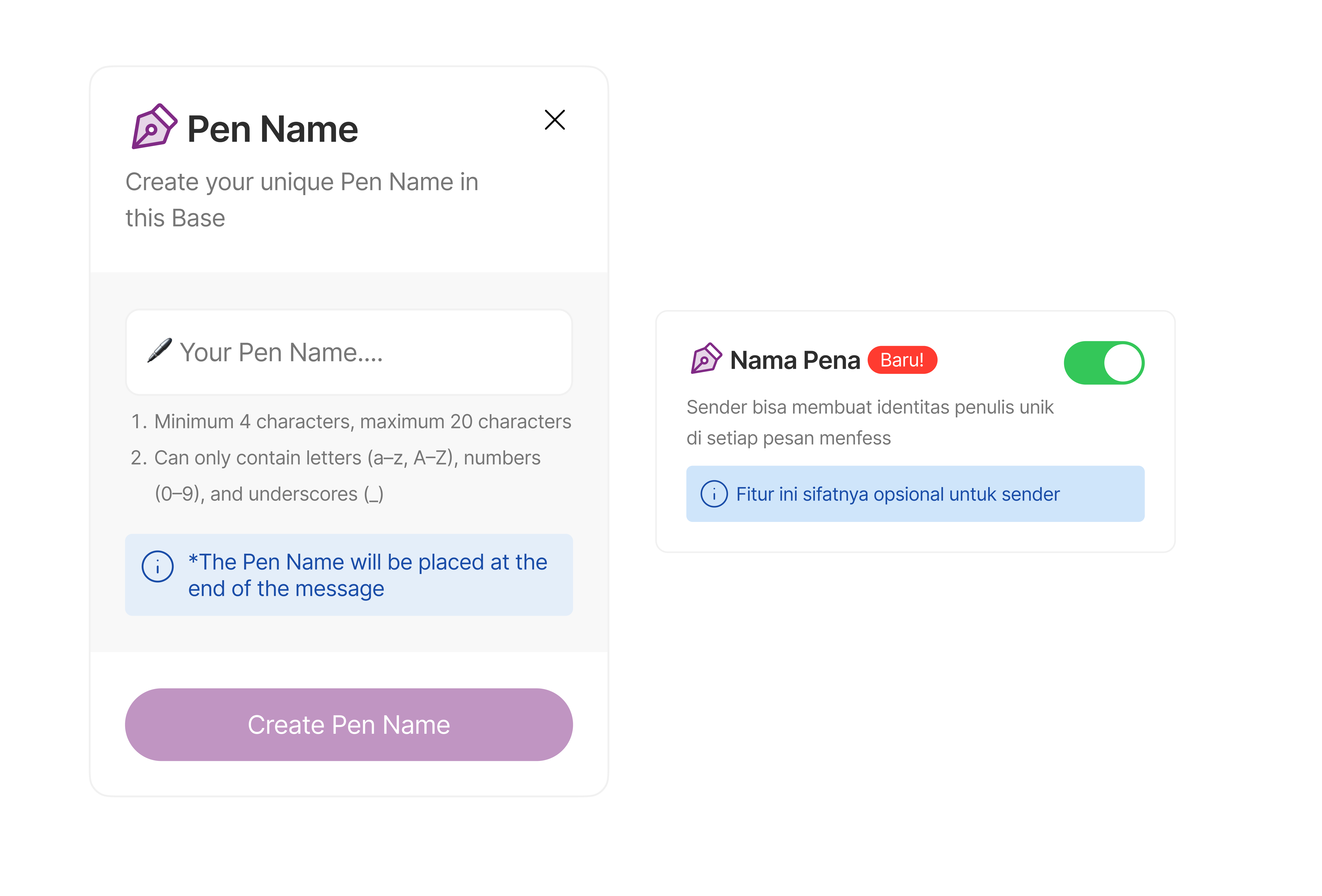
The final design keeps pen names visible without breaking the anonymous feel.
We kept the aesthetic consistent with the app's existing design system, treating the pen name as a subtle badge attached to a thread rather than a loud new layer. The result is a feature that feels native to Menfess.co, with recognizable identities for those who want them, invisibility for those who don't.
What everyone gets out of it
The feature pays off for writers, readers, and base owners alike.
Writers build a recognizable identity and a following, while keeping their real identity private.
Readers can finally follow the voices they like and discover more work from the same author.
Base Owners attract higher-quality, consistent submissions that make a writers community worth visiting.
Menfess.co gains a whole new use case, from anonymous confessions to a home for serialized writing, without losing what made it work in the first place.
Impact
Writers came for the pen name, and @pencorner grew.
Before the pen name feature, @pencorner had no followers. Writers on X/Twitter had no incentive to post on Menfess.co when their identity would be buried in an anonymous feed. The pen name gave them a reason: a consistent identity they could build a following around, without revealing who they are.
As writers started publishing under their own pen names, readers could follow specific voices and come back for more. The base grew from 0 to 21,000 followers. What started as a single feature became the foundation for an entirely new category of users who had never considered Menfess.co before.
Learnings
Listening to customers is the most important thing a co-founder can do.
The more we listened to our writers, the clearer and more effective our solution became. This project taught me that listening to customers is a key part of designing a successful product. It's not just about creating what they ask for. As co-founders, we also have to think holistically about how to better serve our customers and deliver the best possible experience.
Early on, writers told us they wanted recognizable identities. That feedback shaped the entire feature. But as co-founders, we had to look beyond the request itself. We had to consider how pen names would affect readers, base owners, and the overall community. Listening meant understanding not just what one user wanted, but what would make the product better for everyone.
Team
2 amazing & smart people I had the pleasure of working with on this project
Sulthan Alam, Tech Lead
Semaya Krista, Product Manager
.gif)
Other Projects
-portrait.png)
2024 · Co-Founder & Design Lead
Menfess.co — Payout Method
A self-service payout dashboard for Menfess.co, enabling base owners to withdraw earnings in-app instead of waiting 3–5 days for manual Telegram transfers.
2025 · Co-Founder & Design Lead
Menfess.co — Pen Name
A pen name feature that gives anonymous writers a consistent alias while keeping their identity private, growing the community from 0 to 21,000 followers.
2023 · Lead Designer
Hashtag You — Checkout
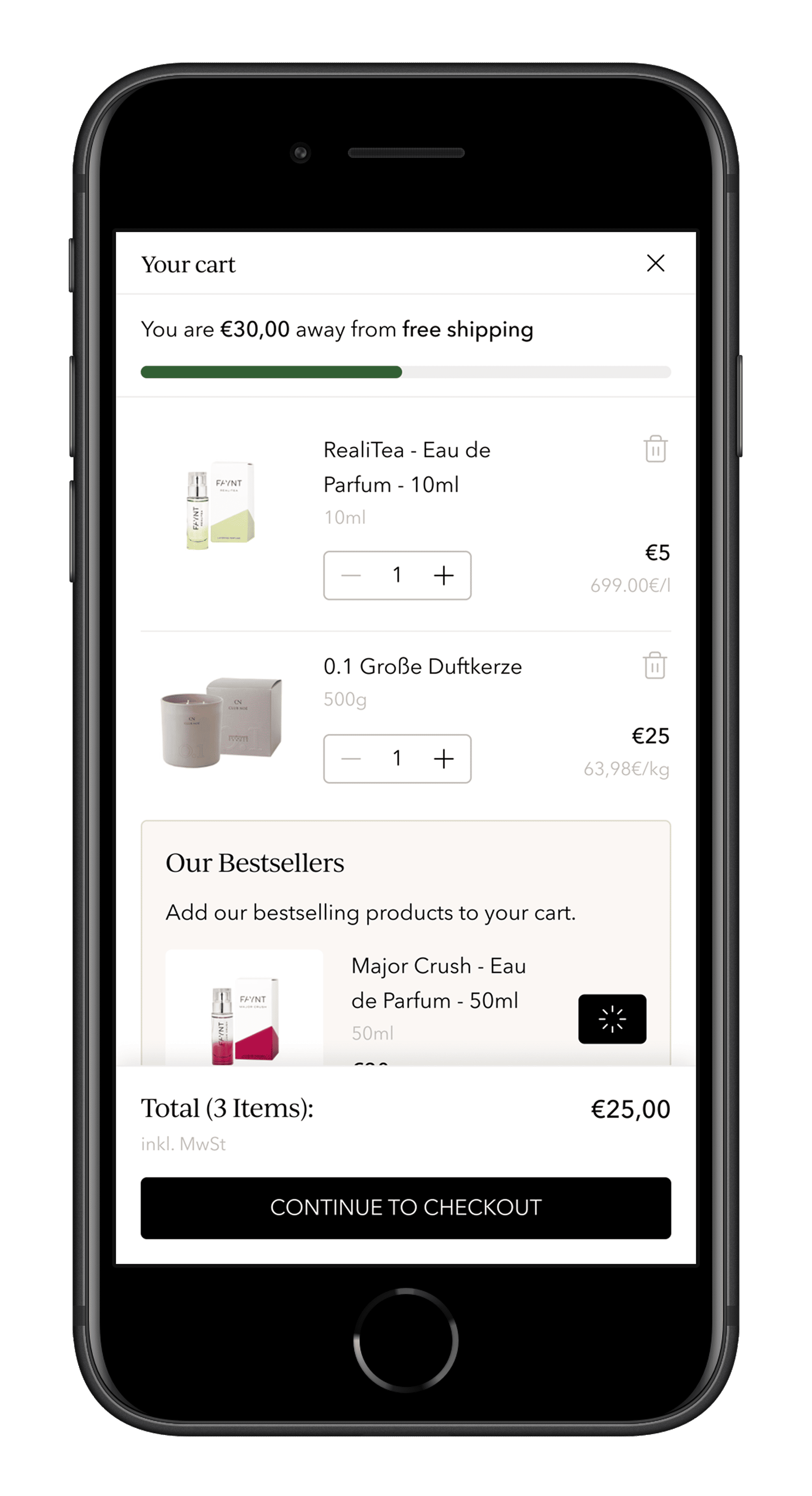
Redesigning the cart and checkout to cut drop-off and lift conversion.
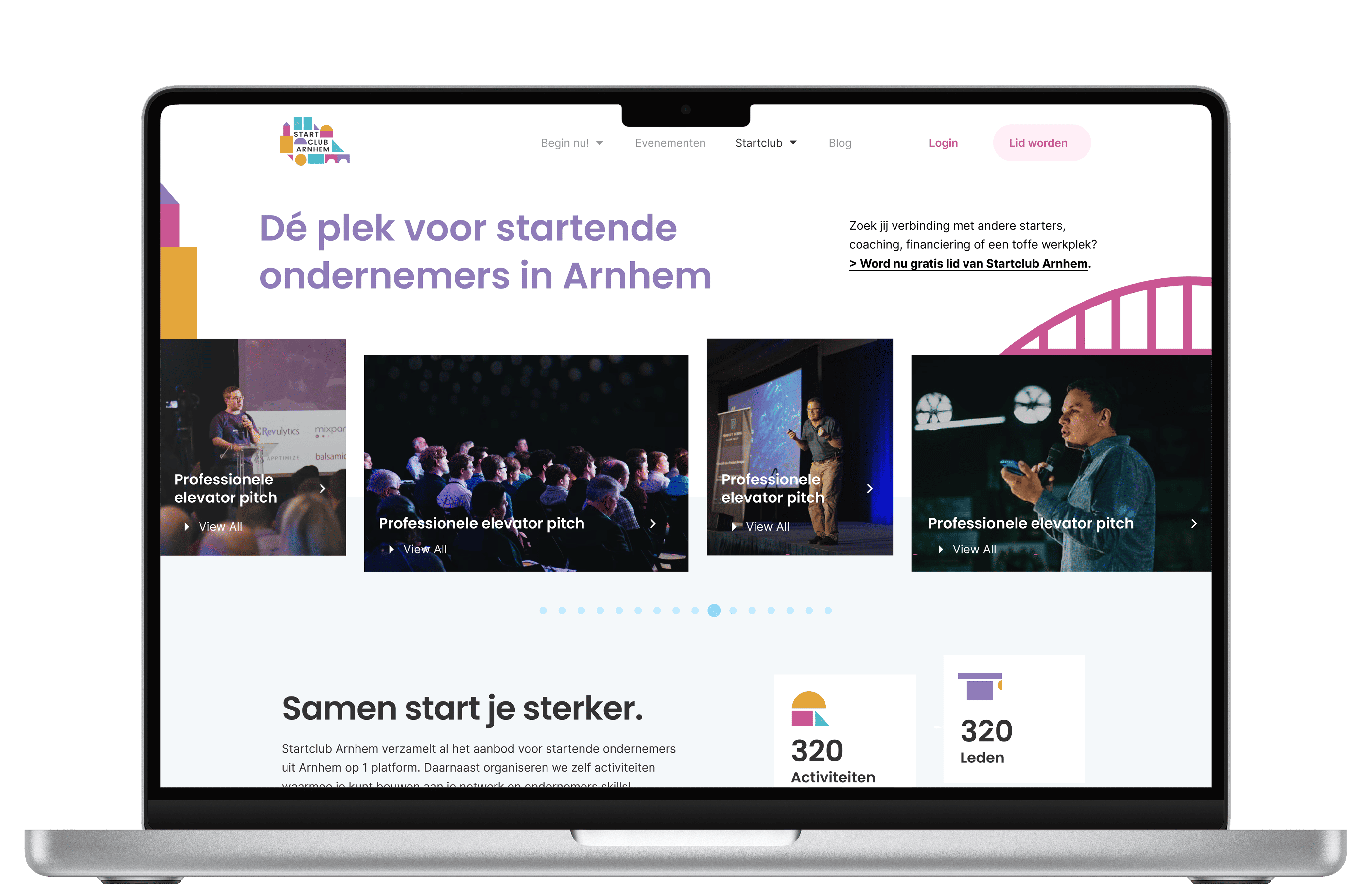
2021 · Web Designer
Start Club Arnhem — Website
A full brand and website refresh for Arnhem's startup community.
.png)
Web Design · External
Student Mobility
A platform connecting students with study-abroad opportunities.
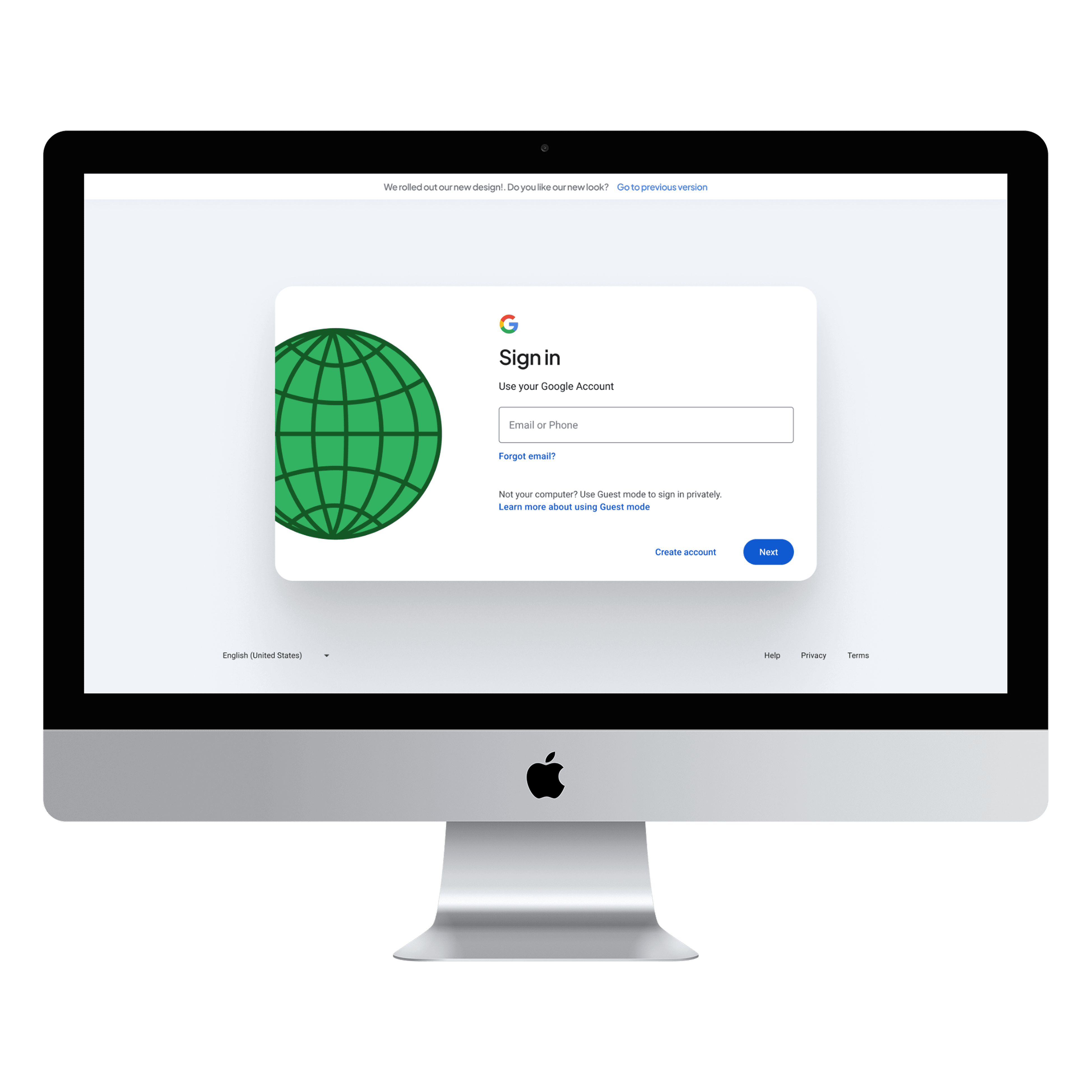
2024 · Concept
Google — Sign-In Redesign
A conceptual redesign of Google's new authentication page.